.png)

.svg)

Let’s face it—traditional phone outreach has become a grind. Cold calls, missed follow-ups, and inconsistent messaging eat up time and resources that could be spent actually growing the business. In 2026, companies are finally realizing that the old way doesn’t scale. That’s where AI calling software comes in.
The shift to voice AI isn’t about replacing people—it’s about removing bottlenecks. Businesses that once relied on large teams of sales reps are now using AI-powered systems to make thousands of personalized calls a day, automatically. These platforms don’t just dial numbers; they hold natural conversations, qualify leads, and record every detail into your CRM, all while maintaining a professional, human tone.
AI is changing how businesses connect with customers. In this article, we’ll look at how AI calling software streamlines operations, personalizes communication, and drives measurable results for growing companies.
What Is AI Calling Software and How Does It Work?
At its core, AI calling software is an intelligent communication tool that replaces repetitive manual outreach with automated, human-like voice interactions. Unlike standard dialers that play a prerecorded script, AI systems use speech recognition, natural language processing (NLP), and machine learning to understand and respond in real time.
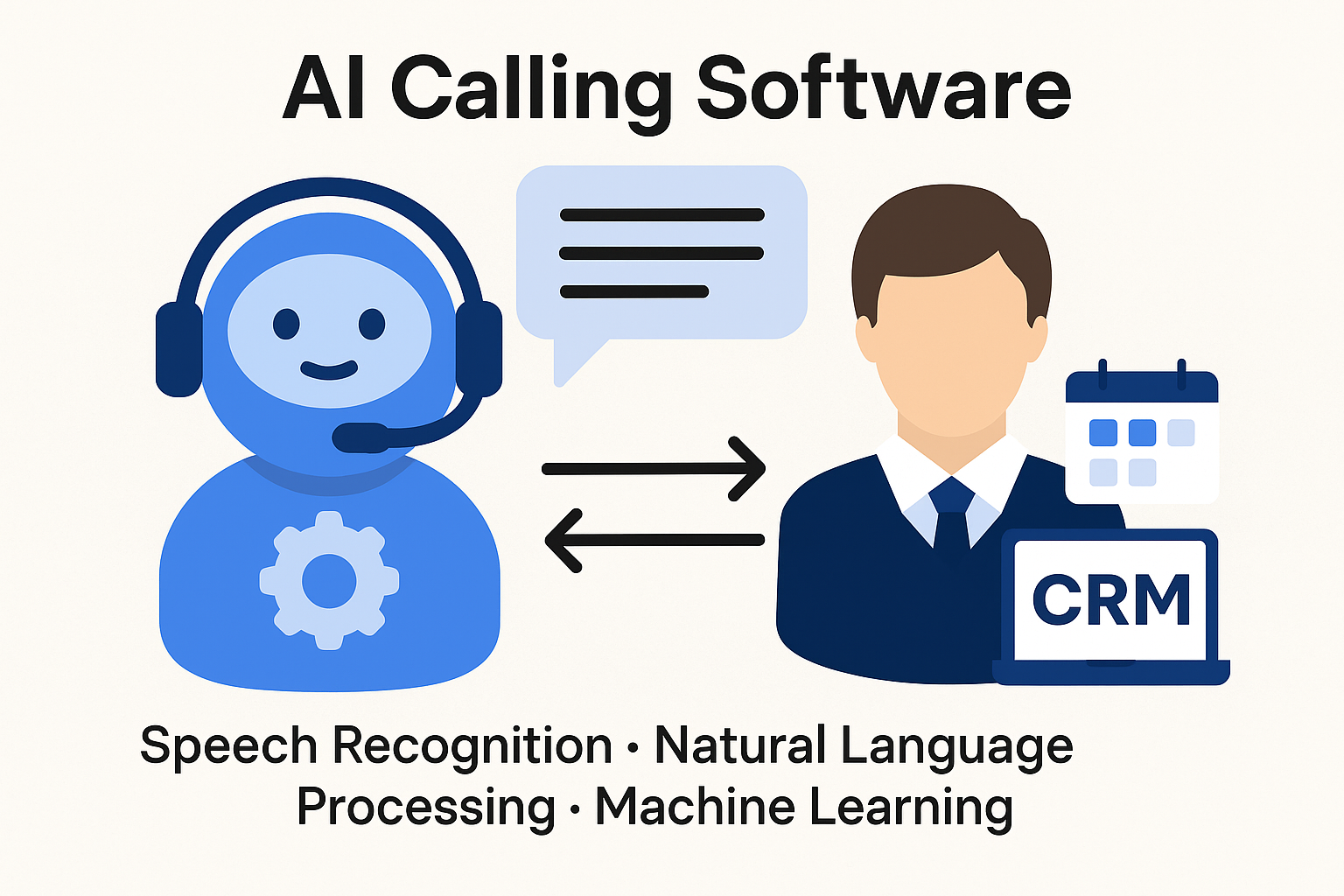
These systems can carry on two-way conversations that sound natural and relevant. If a prospect asks about business hours, pricing, or service availability, the AI can answer instantly. If a lead needs to schedule a demo, it can check the company’s calendar and book it on the spot. The best part? Every call is logged and integrated directly into a company’s CRM, ensuring data accuracy without extra admin work.
This level of automation means teams don’t have to choose between scale and personalization. AI calling software makes it possible to do both—communicate with hundreds of leads per day while keeping every interaction unique and on-brand.
Why Businesses Are Making the Switch
The reasons for switching are pretty straightforward. Labor costs are rising, and finding skilled phone agents willing to make hundreds of calls a day is becoming more difficult. Even when businesses hire, turnover in sales and customer service roles remains high.
Customers have also changed. They expect faster, more personalized responses and don’t want to wait for business hours to get answers. Whether it’s a real estate inquiry or an e-commerce return request, people want instant engagement.
AI calling software solves both sides of the problem. It provides 24/7 availability without burning through payroll budgets. The AI can instantly follow up on form submissions, remind customers about appointments, or re-engage inactive leads—all with the right tone and timing. And since it never gets tired or distracted, it maintains the consistency that human teams sometimes struggle to achieve.
Key Benefits of Using AI Calling Software
Scalable, 24/7 Outreach
One of the biggest advantages of AI calling software is that it scales effortlessly. It can handle hundreds or even thousands of calls simultaneously, something no human team could do without major overhead. Whether it’s prospecting, lead follow-ups, or customer reminders, the AI ensures no opportunity slips through the cracks.
Consistent Brand Messaging
Unlike humans, AI doesn’t have off days. It follows your brand tone, your messaging, and your process exactly as designed. Every call reflects the same level of professionalism, no matter the time or the number of conversations happening at once. This consistency helps build trust and makes your brand sound reliable on every interaction.
Smarter Customer Insights
Every AI-generated call is tracked, analyzed, and scored. The software can identify which scripts perform best, what phrases trigger engagement, and where prospects drop off. Over time, this data builds a deeper understanding of your audience—what they care about, how they respond, and when they’re most likely to convert. Those insights feed back into your strategy, making every campaign sharper.
Cost Efficiency and ROI
The financial case is just as compelling. A single AI system can do the work of an entire outreach team at a fraction of the cost. There’s no need for hiring, training, or managing high-turnover positions. And since AI calling software can qualify leads before passing them to sales, human agents spend their time on warm, high-value prospects instead of cold outreach. That balance directly translates to better ROI.
Real-World Applications
The use cases for AI calling software are growing rapidly across industries. In real estate, AI can instantly contact leads who just filled out a property inquiry form, answer basic questions, and book appointments for agents. For e-commerce, it can handle customer satisfaction follow-ups and recover abandoned carts by offering personalized assistance.
Service providers—from cleaning companies to medical clinics—use AI callers to confirm bookings, remind clients about appointments, or gather post-service feedback. The AI doesn’t just make calls; it completes a workflow that would normally require multiple people.
What all these examples share is speed. Businesses no longer have to wait hours (or days) to reach back out to a lead. With AI, follow-up happens within minutes, increasing the chances of conversion dramatically.
The BlueNest Advantage
Enter BlueNest Marketing’s AI Caller, better known as Mr. Blue. Designed to sound natural and approachable, Mr. Blue uses advanced conversational AI to connect with leads as if they were talking to a real representative. It doesn’t just follow a rigid script—it adapts based on tone, intent, and the flow of the conversation.
What makes Mr. Blue stand out is its seamless integration with existing CRMs and marketing tools. Whether a business uses HubSpot, Salesforce, or a custom platform, the AI Caller can sync data automatically, log call results, and even trigger next steps in the sales funnel.
For small and medium businesses, this kind of automation levels the playing field. It lets them compete with larger organizations without hiring massive sales teams. Mr. Blue works 24/7, following up with leads instantly and ensuring every potential customer gets a professional, timely response. It’s automation that feels personal—and that’s the magic of it.
The Future of Business Communication
Looking ahead, AI calling software will only get smarter. Emotion recognition technology is being refined to detect vocal cues such as frustration, excitement, or hesitation—allowing AI callers to adjust their tone and pacing accordingly. Imagine an AI that can detect when a customer sounds skeptical and respond with reassurance instead of a canned response.
Multilingual capabilities are also expanding. Businesses will soon be able to deploy AI callers that handle multiple languages natively, eliminating communication barriers and expanding reach across regions.
By the end of the decade, AI calling software will likely become a staple in every sales and customer service operation. Just as email automation became standard in marketing, AI-powered calling will become the next must-have tool for efficient communication. The companies that embrace it now will enjoy a significant head start.
Smarter Conversations Start with AI
AI calling software isn’t just another shiny tech tool—it’s a practical upgrade to how businesses connect with their customers. It’s scalable, cost-efficient, and most importantly, it creates a consistent and personal customer experience at scale.
Businesses that adapt early will save time, cut costs, and build stronger relationships without sacrificing the human touch.
To see it in action, meet Mr. Blue at BlueNest Marketing’s AI Caller—your tireless, intelligent sales assistant who never misses a call and always sounds like part of the team.
.png)
.png)
.webp)
.png)
