.png)

.svg)
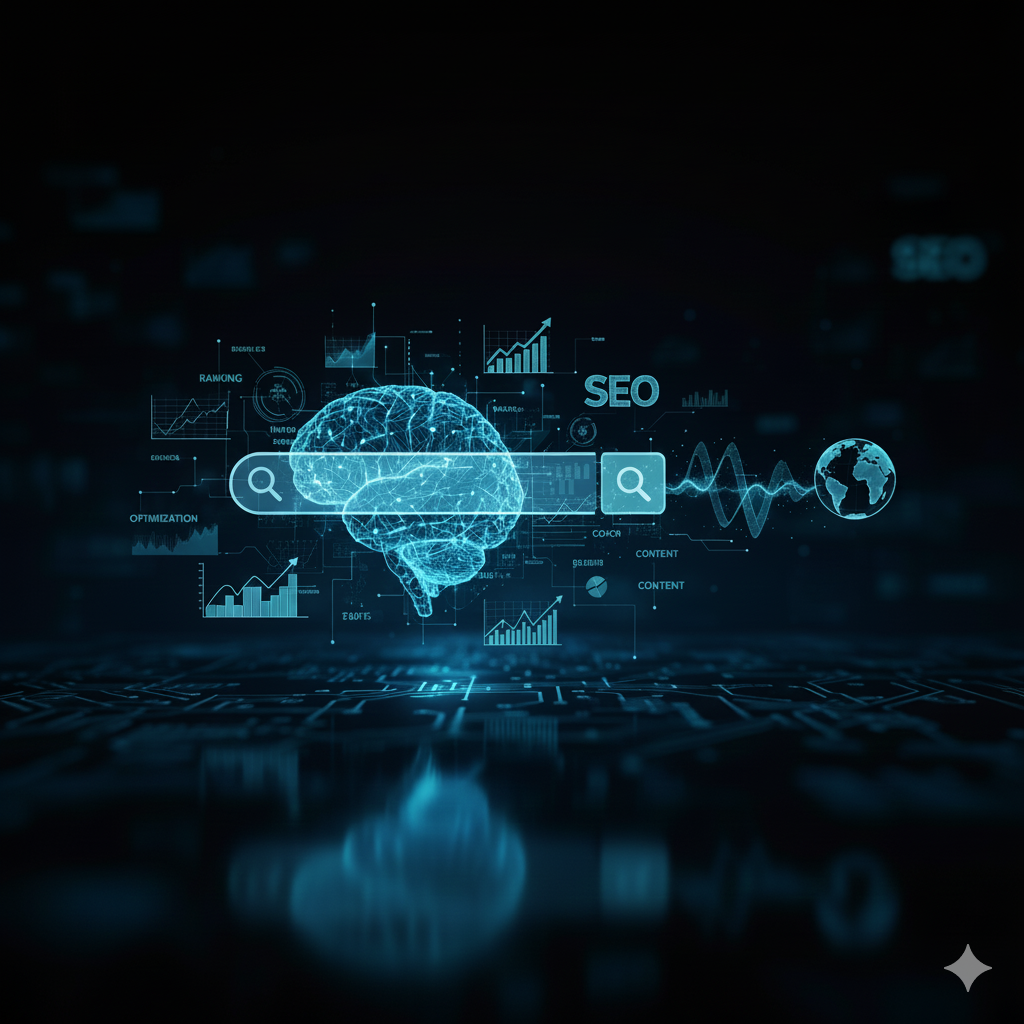
If you’ve been in digital marketing long enough, you’ve seen trends come and go. But AI? That’s not a trend anymore. It’s the new backbone of how search works. Algorithms are smarter, user behavior is more complex, and the days of guessing what keywords might rank are long gone. In 2026, AI for SEO isn’t optional—it’s survival.
What makes this shift more interesting is that small and medium businesses now have access to the same machine learning capabilities that only big corporations could afford a few years back. Today, AI tools don’t just help you rank. They help you understand what your customers want before they even type it. And that’s where real growth begins.
What AI for SEO Really Means in 2026
At its core, AI for SEO is the use of artificial intelligence to improve how your content, site structure, and overall online presence align with user intent. Traditional SEO relied heavily on manual keyword research, backlink chasing, and performance audits. Now, AI handles these tasks faster and with more accuracy than ever before.
Machine learning algorithms analyze billions of data points—from search behavior to sentiment analysis—to determine not only what people are searching for, but why. That “why” is the game-changer. It’s not just about matching a phrase; it’s about understanding the context behind it.
This evolution means SEO is less about stuffing keywords and more about crafting experiences that answer user needs intuitively. Predictive analysis tools can even forecast emerging topics or keywords before they trend, helping you stay ahead of competitors rather than playing catch-up.
Simply put, AI turns your SEO from reactive to proactive.
How AI Is Transforming Core SEO Processes
AI has quietly taken over every layer of SEO work. From keyword research to technical audits, it’s doing the heavy lifting—so your team can focus on strategy and storytelling.
Smarter Keyword Research
Forget spreadsheets full of random search terms. AI can now map entire topic clusters, uncover related search intent, and identify where competitors are winning traffic. It’s like having a research assistant that never sleeps, constantly refining your understanding of what actually converts. Predictive search modeling goes beyond volume—it looks at opportunity and relevance.
Content Optimization and Personalization
Content is still king, but AI is now the strategist behind the throne. Tools powered by natural language processing can evaluate tone, readability, and keyword density in real time. More importantly, they can help personalize content to fit different audience segments. It’s no longer about ranking first—it’s about resonating best.
Technical SEO Automation
Crawl issues, schema markup, site speed checks—these used to eat up entire days of a marketer’s time. Now, AI handles them automatically. Imagine a tool that audits your site, flags errors, and even suggests fixes before you notice something’s wrong. That’s the level of precision businesses are working with today.
Predictive SEO Insights
This is where things get really futuristic. AI can now anticipate which topics or keywords will rise in importance before they peak. That’s how smart marketers are planning their editorial calendars—by looking at tomorrow’s search intent, not just today’s data.
Real-World Impact: What Marketers Are Seeing
Let’s be honest—everyone wants results. Businesses adopting AI for SEO are already reporting faster content turnarounds, higher organic engagement, and improved click-through rates. Marketers are using platforms like SurferSEO, Clearscope, and MarketMuse not just to polish articles, but to predict which topics will bring in the next wave of leads.
For small and medium businesses, this means you don’t need a massive SEO department anymore—you just need the right tools and someone who knows how to use them. That’s where companies like BlueNest Marketing bridge the gap, combining AI precision with real human strategy.
Challenges and Ethical Considerations
Of course, not everything about AI for SEO is sunshine and instant rankings. The biggest pitfall? Overreliance. AI can generate content, yes—but not good content without human oversight. The internet is already full of AI-written pages that read like a blender full of buzzwords.
That’s why Google’s stance remains clear: AI-generated content is fine as long as it provides real value. The human touch still matters. Expertise, experience, author credibility—those are the factors that keep your content in Google’s good graces under the E-E-A-T framework.
There’s also the issue of brand voice. Automation can’t replicate nuance. If every post sounds like a robot wrote it, you risk losing authenticity. Smart marketers are blending both worlds: letting AI handle the mechanics while humans focus on the storytelling.
Future of AI for SEO Beyond 2026
Looking beyond this year, AI is steering SEO into an entirely new direction. Voice search is expected to dominate local and mobile queries, meaning optimization will rely more on natural language than typed keywords. Imagine your content being discovered because it sounds right, not just because it’s written well.
Meanwhile, multimodal search—where users combine text, image, and even video queries—is becoming mainstream. AI will play a crucial role in understanding these complex signals. Websites that adapt early will capture the next generation of traffic.
In short, the future of SEO looks a lot less mechanical and a lot more human-centered. AI won’t replace marketers. It’ll replace marketers who refuse to adapt.
AI for SEO: The Next Frontier
AI isn’t here to steal your job. It’s here to make your job easier, faster, and far more effective. As businesses fight for visibility in an increasingly competitive space, the difference between page one and page five will come down to who uses AI smarter—not who uses it more.
If you’re ready to future-proof your SEO and stop playing catch-up with Google’s next algorithm update, it’s time to explore what’s possible.
Partner with BlueNest Marketing to see how AI for SEO can transform the way you attract, convert, and retain customers in 2026 and beyond.
.png)
.png)
.webp)
.png)
